Bringing a puppy home is an exciting time, but it also comes with a steep learning curve. Feeding is one area where well-meaning owners frequently make mistakes that can have lasting consequences for their puppy’s health. The good news is that most of these mistakes are easily avoided once you know what to look out for.
Overfeeding: The Most Common Culprit
Overfeeding is the single most widespread puppy feeding mistake, and it is entirely understandable. Puppies are enthusiastic eaters, they wolf down their food in seconds and look up as though they have never been fed in their lives. It is very easy to interpret this as hunger and add a little more to the bowl.
The problem is that puppies who are consistently overfed gain weight faster than their developing skeletons can handle. Excess weight during puppyhood significantly increases the risk of orthopaedic problems, particularly in large and giant breeds where controlled growth is especially important. It also establishes a pattern of overconsumption that can lead to obesity in adulthood.
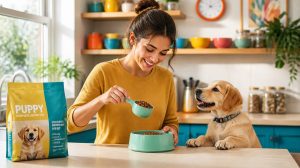
Use the feeding guide on your puppy food as a starting point, monitor your puppy’s body condition regularly, and weigh portions accurately rather than estimating. A digital kitchen scale is one of the most useful tools a puppy owner can have.
Giving Too Many Treats
Treats are wonderful for training and bonding, but they add up quickly. Many puppy owners do not realise just how many calories they are adding to their puppy’s diet through treats, especially during intensive training phases. A handful of small treats across a training session can represent a significant proportion of a small puppy’s daily caloric needs.
Keep treats tiny, choose options made from natural, wholesome ingredients, and always count them as part of the daily calorie budget. If you have had a treat-heavy day of training, reduce meal sizes slightly to compensate. Avoiding high-calorie, highly processed treats is also important: these often contain added sugars, artificial flavours, and preservatives that have no place in a growing puppy’s diet.
Feeding the Wrong Type of Food
Puppy food exists for a reason. Puppies have very different nutritional requirements from adult dogs: they need higher levels of protein, fat, calcium, and phosphorus to support rapid growth and development. Feeding an adult dog food to a puppy, even a high-quality one, can result in nutritional deficiencies that affect bone development, muscle growth, immune function, and overall health.
Conversely, feeding a large or giant breed puppy a food formulated for small breeds, or a generic puppy food without breed-size consideration, can also cause problems. Large breeds in particular need carefully calibrated calcium and phosphorus levels to ensure their skeletal development proceeds at an appropriate rate.
Always choose a puppy food appropriate to your dog’s expected adult size and verify that it meets the nutritional standards recommended by your vet or a qualified veterinary nutritionist.
Inconsistent Feeding Schedules
Puppies thrive on routine, and this applies to feeding as much as to sleep and toilet training. Inconsistent feeding times, skipping meals, or constantly changing the timing of feeds can disrupt a puppy’s digestive rhythm and make toilet training significantly harder. When a puppy eats at predictable times, their digestive system follows a predictable pattern, and you can anticipate when they will need to go outside.
Establish a feeding schedule early and stick to it as consistently as possible. This does not mean occasional variations will cause lasting harm, but making consistency the norm creates a calmer, more settled puppy who knows what to expect from their day.
Sharing Human Food
Sharing a bite of your meal with a puppy can seem harmless or even kind, but it introduces a range of risks. Many human foods are toxic to dogs, including onion, garlic, grapes, raisins, chocolate, macadamia nuts, and anything containing xylitol. Even foods that are not directly toxic can be too rich, salty, or fatty for a puppy’s developing digestive system.
Beyond the safety concern, sharing human food teaches puppies to beg and creates expectations around the dinner table that can become persistent and difficult to break. It also makes it harder to track what your puppy is actually consuming each day.
Keep human food for humans and choose high-quality, natural puppy treats specifically designed for dogs. Your puppy will be just as happy, and considerably safer, for it.
—
Frequently Asked Questions
What are the most common puppy feeding mistakes?
The most common puppy feeding mistakes include overfeeding, giving too many treats, feeding human food, and not sticking to a consistent meal schedule. These habits can lead to nutritional imbalances, digestive issues, fussy eating, and unhealthy weight gain that can follow your dog into adulthood.
Can overfeeding a puppy cause long-term health problems?
Yes, overfeeding puppies is one of the leading causes of obesity in adult dogs, and it can also cause puppies to grow too quickly which puts unnecessary stress on their developing skeletal system. Sticking to recommended portion sizes and treating treats as extras rather than meal replacements is essential for healthy development.
Is it okay to give puppies human food?
Many human foods are either harmful to dogs or simply not appropriate for a puppy’s nutritional needs, so it is best to avoid making human food a regular part of their diet. Some foods like onions, grapes, raisins, and anything containing xylitol are toxic to dogs, and even safe foods can displace the balanced nutrition puppies need from proper puppy food.
Why is consistency important when feeding a puppy?
Feeding a puppy at consistent times each day helps regulate their digestion, makes toilet training much easier, and establishes healthy eating habits that stick into adulthood. Inconsistent feeding schedules can cause puppies to become anxious around mealtimes or develop unpredictable toileting patterns.