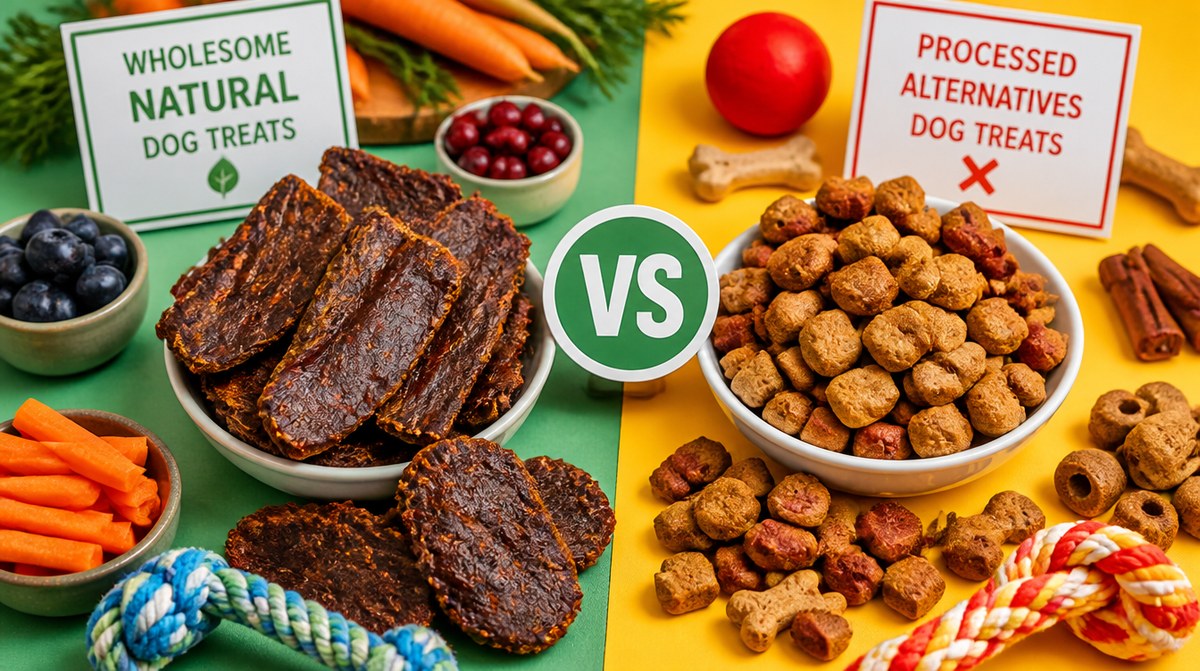
Understanding this difference helps dog owners make more informed decisions about what they’re rewarding their pets with every day.
What Defines a Natural Dog Treat?
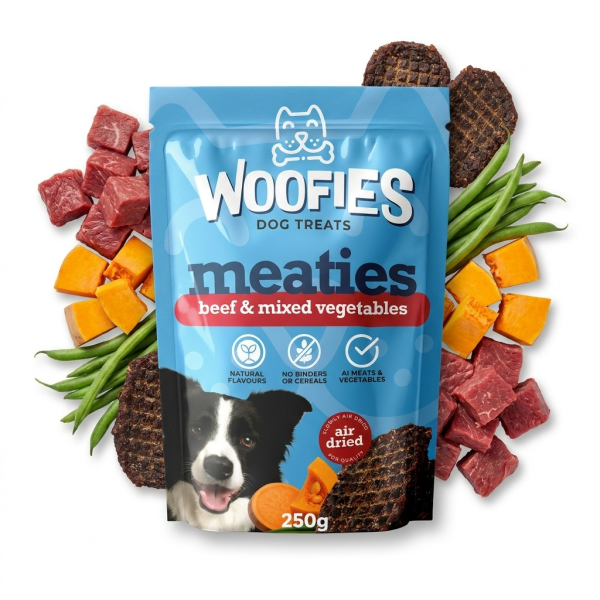
Natural dog treats are made with minimal interference between source ingredient and final product.
Typically, they contain:
Single-source animal proteins
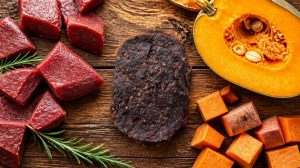
Dehydrated or freeze-dried meats
Whole food ingredients without chemical modification
Importantly, natural treats avoid:
Artificial preservatives
Synthetic colours
Chemical flavour enhancers
The goal is straightforward: preserve the integrity of the original ingredient.
What Defines a Processed Dog Treat?
Processed dog treats are designed primarily for:
Shelf stability
Low production cost
Strong flavour consistency
To achieve this, manufacturers often rely on:
Meat by-products and rendered meals
Artificial flavour coatings
Chemical preservatives
High carbohydrate fillers
These ingredients are engineered for manufacturing efficiency rather than biological benefit.
While not all processed treats are harmful, they are typically lower in nutritional density.
Digestive Health and Gut Function
One of the most noticeable differences between natural and processed treats is digestive response.
Natural treats:
Are easier to break down
Contain fewer irritants
Support healthier gut flora
Processed treats:
Often contain fillers that are harder to digest
May cause inconsistent stool quality in sensitive dogs
Can contribute to bloating or mild gastrointestinal upset
Dogs with sensitive stomachs often show clear improvement when switched to natural treat options.
Skin, Coat, and Allergy Response
Skin and coat health is one of the most visible indicators of dietary quality.
Natural treats support:
Reduced exposure to allergens
Higher omega-3 intake (in fish-based treats)
Lower inflammatory load
Processed treats, particularly those with artificial additives, can sometimes contribute to:
Itchy skin
Excessive shedding
Mild allergic reactions in sensitive dogs
While not every dog reacts the same way, ingredient quality plays a significant role in dermatological health.
Behaviour and Training Effectiveness
Training success is often influenced by treat quality more than owners realise.
Natural treats tend to:
Have stronger natural aromas
Be more motivating for dogs
Provide higher reward value
This makes them especially effective for:
Recall training
Obedience reinforcement
Behaviour shaping
Dogs are more responsive to biologically appropriate rewards – real meat naturally outperforms artificial flavouring.
Long-Term Health Considerations
Over time, diet quality compounds. Even though treats make up a small portion of intake, consistent exposure to low-quality ingredients can contribute to:
Weight gain from empty calories
Reduced nutrient absorption
Increased sensitivity to additives
Chronic digestive imbalance in some dogs
Natural treats support a cleaner nutritional baseline, reducing unnecessary metabolic load.
The Role of Transparency
One of the most important differences between natural and processed treats is transparency.
Natural treats usually have:
Short ingredient lists
Clear sourcing
Minimal ambiguity
Processed treats often rely on vague terminology, making it difficult to understand exactly what the dog is consuming.
Transparency builds trust – and more importantly, ensures better dietary decisions.
Summary: Real Food vs Engineered Food
Natural dog treats are closer to real food. Processed treats are closer to engineered food products.
Neither category is inherently “perfect” or “bad,” but the nutritional intent is very different. Natural treats prioritise biological compatibility. Processed treats prioritise manufacturing efficiency.
For most dogs, especially those with sensitivities or long-term health goals, natural options provide a more consistent and supportive foundation.
#3
Perfect – this is where these posts start to become real SEO assets rather than just supporting content. I’ll expand each into deeper authority pieces with stronger structure, more nuance, and better topical coverage while keeping them tightly aligned to your “Dog Nutrition & Healthy Eating” pillar.
I’ll deliver them in a clean set so you can drop them straight into WordPress.
Are natural dog treats better for dogs with allergies?
Yes, natural dog treats are often a better choice for dogs with allergies or sensitivities because they tend to use fewer ingredients and avoid common allergens like wheat, corn, and artificial additives. Single-ingredient natural treats are especially useful for identifying and managing food sensitivities.
Do natural dog treats last as long as processed ones?
Natural dog treats may have a shorter shelf life than heavily processed treats because they rely on natural preservation methods like air-drying or freeze-drying rather than artificial preservatives. Storing them in a cool, dry place or an airtight container helps extend their freshness without compromising quality.
Are natural dog treats worth the extra cost?
Many pet owners find natural dog treats worth the investment because of the long-term health benefits they offer, including better digestion, healthier coats, and fewer vet visits related to diet. Treating your dog less frequently with a higher quality treat is often a smarter approach than buying cheap, low-nutrition options in bulk.