Treats are one of the great joys of dog ownership, and it is natural to want to start sharing them with a new puppy as soon as they arrive home. But puppies are not just small adult dogs: their digestive systems, teeth, and nutritional needs are all in a state of rapid development, and knowing when and how to introduce treats makes a real difference to their health and wellbeing.
The First Weeks: Milk and Puppy Food Only
For the first several weeks of a puppy’s life, the only nutrition they need comes from their mother’s milk. This phase typically lasts until around three to four weeks of age, when the weaning process begins and puppies start transitioning to soft puppy food. During this entire period, treats have no place in a puppy’s diet. The digestive system is simply not ready for anything beyond species-appropriate early nutrition.
By the time most puppies arrive at their new home, usually at around eight weeks of age, they have been fully weaned and are eating puppy-formulated food. This is a milestone, but it does not mean treats should be introduced straight away.
When Are Treats Generally Safe?
Most puppies can begin having small amounts of appropriate treats from around eight to ten weeks of age, provided those treats are specifically designed for young puppies or are very gentle, natural whole foods. The emphasis here is on tiny amounts and very simple ingredients. A puppy’s gut flora is still developing, and their digestive system is more sensitive than an adult dog’s. Introducing too much too soon, or choosing treats with complex ingredient lists, can lead to upset stomachs, loose stools, and unnecessary discomfort.
The safest early treats tend to be soft, small, and made from single or minimal ingredients. Freeze-dried meat treats, small pieces of cooked chicken breast, or treats specifically labelled as suitable for puppies are good starting points. Avoid anything hard, chewy, or very large in the early months, as puppies also lack the jaw strength and dental development to safely manage these.
Soft vs Hard Treats for Young Puppies
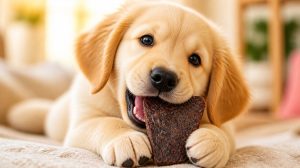
Texture matters enormously when choosing treats for puppies. Hard treats, including many biscuit-style or dried meat treats designed for adult dogs, can be too tough for young teeth and pose a choking or digestive risk. Soft treats or those that break down easily are a much safer choice in the early months.
As puppies grow and their teeth develop, you can gradually introduce firmer treat textures. By around three to four months, most puppies have developed enough jaw strength and digestive capacity to handle a wider range of treats. Always supervise treat time regardless of age, but especially in those early months when everything is new and exploration tends to involve a lot of enthusiastic chewing.
Treats and Training
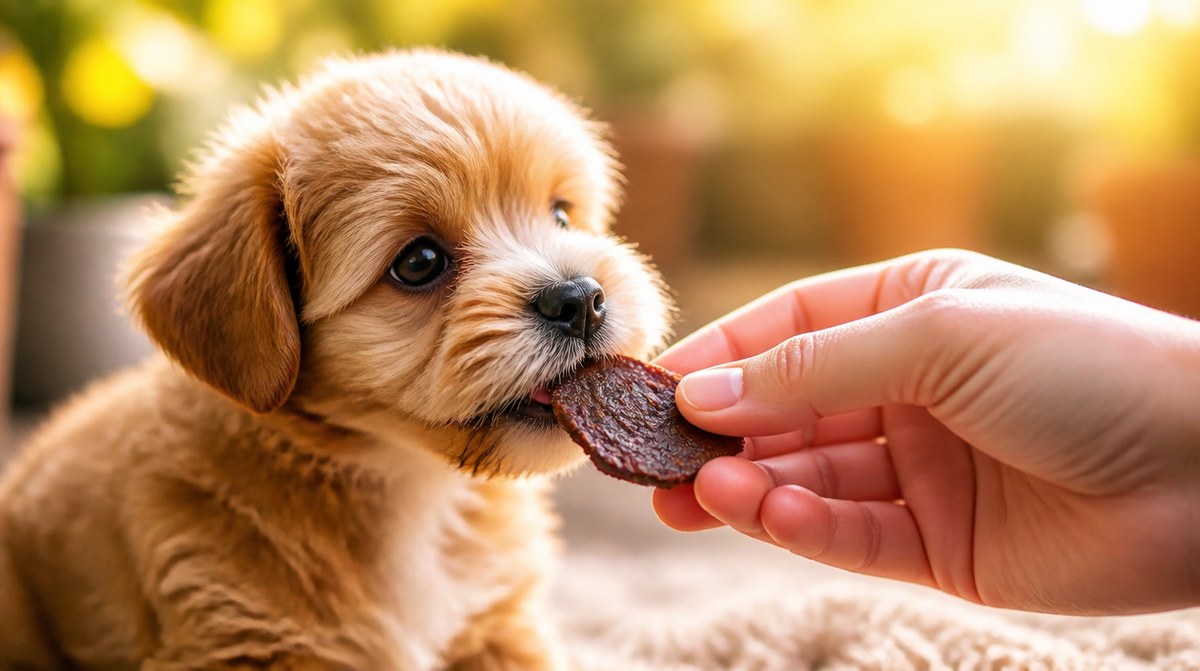
Treats become particularly valuable from around eight to ten weeks of age because this is when puppy training typically begins. Short, positive training sessions with small, tasty treats are one of the most effective ways to teach a puppy basic cues like their name, sit, and come. For this purpose, treats should be tiny, soft enough to eat quickly without distraction, and something the puppy genuinely finds rewarding.
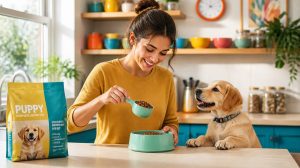
Keep training treat portions very small, around the size of a pea or smaller, so you can use them frequently throughout a session without overfeeding. Given that puppies have small stomachs and specific caloric needs based on their size and breed, every treat you give should be factored into their overall daily intake.
Moderation Is Everything
The golden rule with puppies and treats is moderation. A puppy’s primary nutritional needs should be met through a complete and balanced puppy food. Treats should play a supporting role, not a central one. As a guideline, treats should make up no more than ten percent of a puppy’s daily calorie intake, and during the early weeks, even less than that.
Introducing treats thoughtfully, choosing gentle and natural options, and keeping quantities appropriate to your puppy’s size will set them up for a healthy relationship with food from the very start.
—
What are safe treat options for young puppies?
Safe treats for young puppies include small pieces of soft, single-ingredient natural treats such as freeze-dried meat or puppy-specific training treats. Avoid anything hard, overly chewy, or made with artificial additives, as puppies have sensitive digestive systems and developing teeth that need protection.
How many treats should I give a puppy?
Treats for puppies should make up no more than 10% of their total daily calorie intake to avoid disrupting the nutritional balance of their main diet. Because puppies are small and growing fast, even a few treats can add up quickly, so keeping portions tiny is important.
Can treats affect a puppy’s main diet?
Yes, giving too many treats can cause puppies to lose interest in their regular meals or throw out the nutritional balance they need during this critical growth stage. Introducing treats slowly and using them primarily for training or positive reinforcement helps keep their diet on track.
Frequently Asked Questions
When can puppies start eating treats?
Puppies can generally start eating treats from around 8 weeks of age, once they have been weaned and are comfortably eating solid puppy food. At this stage, treats should be very small, soft, and specifically designed for puppies to avoid any choking risk or digestive upset.
What are safe treat options for young puppies?
Safe treats for young puppies include small pieces of soft, single-ingredient natural treats such as freeze-dried meat or puppy-specific training treats. Avoid anything hard, overly chewy, or made with artificial additives, as puppies have sensitive digestive systems and developing teeth that need protection.
How many treats should I give a puppy?
Treats for puppies should make up no more than 10% of their total daily calorie intake to avoid disrupting the nutritional balance of their main diet. Because puppies are small and growing fast, even a few treats can add up quickly, so keeping portions tiny is important.
Can treats affect a puppy’s main diet?
Yes, giving too many treats can cause puppies to lose interest in their regular meals or throw out the nutritional balance they need during this critical growth stage. Introducing treats slowly and using them primarily for training or positive reinforcement helps keep their diet on track.