Training a dachshund puppy is one of the most rewarding, occasionally maddening, and ultimately joyful experiences a dog owner can have. Dachshunds were bred to be independent hunters, capable of making their own decisions underground while pursuing prey. That heritage lives on in their boldly self-assured temperament. They are clever dogs who will learn quickly when properly motivated, but they are also dogs who will cheerfully ignore you if they decide the reward is not worth the effort. Understanding this from the start makes all the difference.
Understanding the Dachshund Personality
The term “stubborn” gets applied to dachshunds frequently, and while it is not entirely unfair, it is more accurate to say they are independent thinkers. A dachshund does not refuse to comply because they are unintelligent. They refuse because they are weighing up whether compliance is in their best interest at that moment. Your job as a trainer is to consistently make compliance the most attractive option on offer.
This is a fundamentally different mindset from training a breed that is inherently eager to please. Positive reinforcement is not just a nice approach with dachshunds. It is the only approach that works reliably over the long term. Punishment-based methods are likely to produce a fearful, shut-down dog who becomes even less willing to engage. Patience, consistency, and genuinely irresistible rewards are your most important tools.
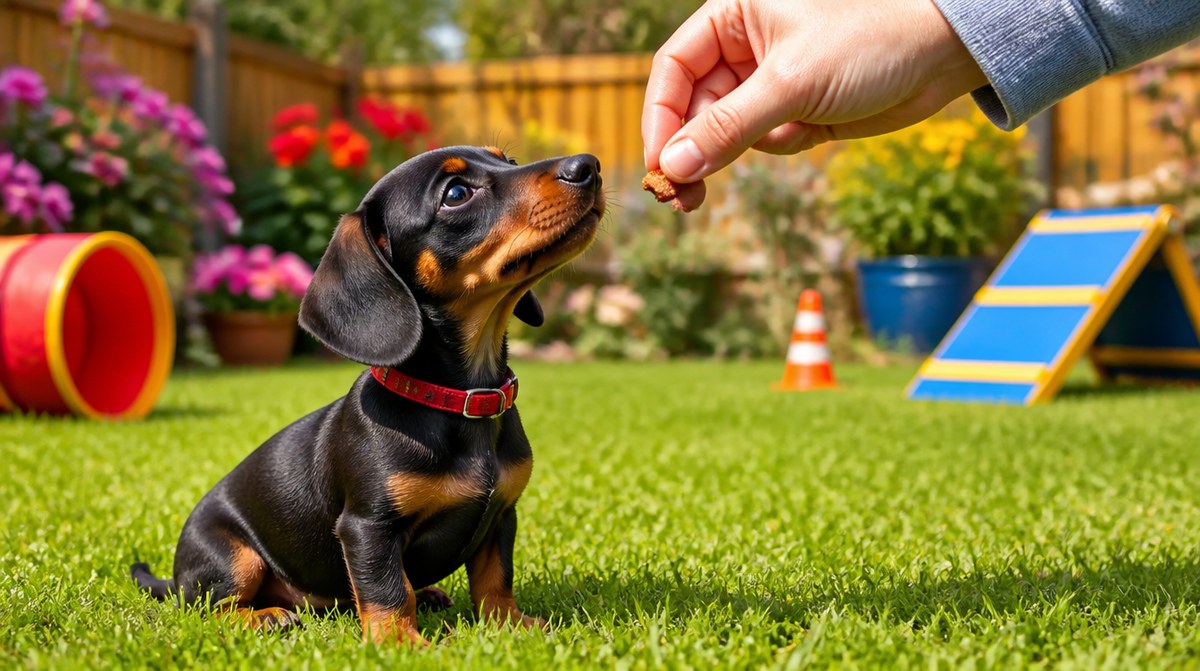
Because motivation is everything with dachshunds, your treat selection matters enormously. You want something your puppy finds absolutely irresistible. For most dachshunds, soft, meat-based treats are the highest value reward. The more aromatic, the better. A tiny piece of air-dried chicken, beef, or kangaroo will capture most dachshund puppies’ full and immediate attention.
Keep training treats tiny, no larger than a pea, so they are consumed in under two seconds and your puppy can immediately refocus. This speed of consumption is important in training because the reward needs to be closely connected in time with the behaviour you are marking and reinforcing.
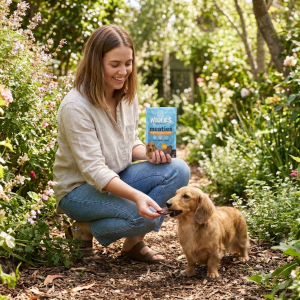
Natural single-ingredient treats are ideal for training dachshund puppies because they are free from artificial additives that might cause digestive upset in young dogs, and they can be portioned to exactly the right size. At Woofies, natural treat options made from quality Australian proteins are well suited to this kind of high-frequency reward training.
Keep Sessions Short
Dachshund puppies, like all young dogs, have limited attention spans. A training session that goes on too long will result in a puppy who checks out, wanders off, or starts offering silly behaviours out of frustration and boredom. Keep sessions to two to five minutes, particularly with very young puppies under four months of age. Multiple short sessions throughout the day are far more effective than one long session.
End every session on a positive note, with a behaviour your puppy can perform reliably so that you can finish with enthusiasm and reward. This sets a positive tone for the next session and keeps your puppy associating training with fun and reward rather than frustration.
Start with the Basics
Begin with simple, foundational behaviours: sit, drop, stay, come, and leave it. These basics not only create a framework for more advanced training but also establish the fundamental communication between you and your dog. A puppy who understands how to earn rewards through offered behaviours is infinitely easier to work with than one who has never been given the opportunity to learn how learning works.
Sit is almost always the easiest starting point and can usually be shaped in just a few sessions using lure and reward. Once your dachshund puppy reliably sits on cue, you have a tool you can use to manage behaviour and create structured moments throughout the day.
Consistency Is Everything
Dachshunds are opportunists. If a behaviour is sometimes rewarded and sometimes not, they will continue to offer it. This works in your favour during formal training, but it works against you when it comes to unwanted behaviours. Every person in your household needs to use the same cues, enforce the same rules, and reward the same behaviours. Mixed messages from different family members are one of the most common reasons dachshund training stalls.
Consistency also means setting up your home environment to support good choices. If you do not want your dachshund on the furniture, everyone needs to uphold that rule, not just most of the time. If jumping up for greeting is being trained away, no one gets to make an exception because the puppy is just too cute.
Be Patient and Celebrate Progress
Training a dachshund puppy is a marathon, not a sprint. There will be days when everything clicks and your puppy seems like a training genius. There will also be days when they look at you like you have lost your mind and wander off to investigate something far more interesting. Both days are completely normal.
Celebrate the small wins, stay consistent, keep sessions positive and short, use genuinely motivating natural treats, and remember that the independent spirit that makes dachshunds occasionally challenging to train is also the quality that makes them so endlessly entertaining to live with. With patience and the right approach, your dachshund puppy will grow into a well-mannered, confident companion who is an absolute joy.
—
Frequently Asked Questions
Are dachshund puppies hard to train?
Dachshund puppies can be a challenge to train because the breed was originally developed to work independently, which means they can be stubborn and easily distracted. That said, they’re also intelligent and food-motivated, which works in your favour when you have the right treats on hand. Consistency and positive reinforcement are the keys to successfully training a dachshund puppy.
What treats work best for training dachshund puppies?
The best treats for training dachshund puppies are small, smelly, and soft enough to eat in a second without interrupting the session. High-value options like tiny pieces of air-dried meat tend to keep a dachshund puppy’s attention even in distracting environments. Avoid anything large or hard that a puppy might struggle to chew, and keep treat portions tiny to avoid overfeeding during longer sessions.
How important is consistency when training a dachshund puppy?
Consistency is absolutely essential when training dachshund puppies because the breed is quick to exploit any loophole or inconsistency in the rules. If a behaviour is rewarded sometimes and ignored other times, a dachshund puppy will quickly figure out they don’t always need to comply. Using the same cues, the same reward timing, and the same treat every time helps the lesson stick much faster.
How do I use positive reinforcement effectively with a dachshund puppy?
Positive reinforcement works best with dachshund puppies when the reward comes immediately after the desired behaviour, so the pup makes a clear connection between the action and the treat. Use a consistent marker word or a clicker to bridge the gap between the behaviour and the reward delivery. Keep training sessions short, fun, and always ending on a success — dachshund puppies lose interest quickly, so five minutes of focused training beats thirty minutes of frustration.